

- Know your audience's consumption mode: scrollers (short clips), listeners (long audio), and watchers (YouTube with intent) are all reachable from a single well-structured filming session.
- Format is the make-or-break decision: a consistent, codified format trains audiences to return. Vague or unstructured content loses viewers in the first 30 seconds and gets buried by the algorithm.
- The long game wins: most brands quit before traction builds. The compounding advantage goes to those who stay consistent long enough for the right audience to find them.
Nineteen million people in the UK listen to a podcast each week and, of the top ten shows in the UK, every single one has video. YouTube grew 31% as a podcast destination in a single year. And in the 18–34 demographic podcasts now touch more people weekly than linear TV.
We’ve been seeing this shift in action at HSG, with clients increasingly recognising the value of creating and publishing their own video content (whether it’s an ‘official podcast’ or simply filming one-off conversations and events).
It was in this spirit that I made my way down to the London Podcast Show last month, ready to hear directly from the companies behind the UK’s leading shows.
Here’s what stood out.
Know who you’re actually reaching
The people you want to get your content in front of have fractured into three distinct consumption modes.
- Scrollers move through LinkedIn, TikTok, and Shorts at speed, responding to clips that earn their attention in the first few seconds.
- Listeners have Spotify running while they commute or work, happy to give 40 minutes (or more) to a conversation or host they trust.
- Watchers go to YouTube or video podcast platforms with intent. Searching, subscribing, returning to channels that have given them something worth coming back for.
A video podcast, built and produced with all three modes in mind from the start, can cover this full surface area from a single filming session.
Format is not optional
So, you’ve decided to do a podcast? Great. But, before you even think about ordering a microphone, you need to make some decisions about what it is you’re actually making.
Format matters far more than most firms realise and getting it wrong is the most common failure.
Look at two shows that do it best in this space. Acquired picks one company, does hours of research and publishes a deep dive in every episode. That's the format, and it's why tens of thousands of people show up for each episode.

Fintech Insider by 11FS does the opposite: a sharp weekly show built around what happened in fintech that week, plus expert takes. People tune in because it's useful and timely.
Each format serves a different audience and a different goal, but the key is that it's codified and a reliable hallmark of the show. That consistency to format is what trains an audience to come back and teaches them what to expect, encouraging sustained engagement.
What doesn't work is a recurring internal meeting that gets filmed, or a conversation without a point of view where guests cannot offer anything fresh. Viewers typically decide in the first 30 seconds if they’re going to stay beyond the one minute mark, and that's exactly the threshold that determines if the algorithm pushes your video to more people. A vague format will kill your show before it even starts.
Another common mistake is failing to design for repurposability before hitting record. A single well-structured filming session, built with scrollers, listeners, and watchers in mind from the start, can cover the full distribution surface area. But that only works if you have a clear format and strategy in mind before production, not after.
Commit to the long game
Get the basics right – format, audience, distribution strategy – and you've cleared the table stakes. But that alone isn’t enough to build something that actually lasts.
What most brands get wrong once they’ve overcome these initial hurdles is consistency – staying in long enough for it to compound.
The sad truth is that most brands give up before it starts working.
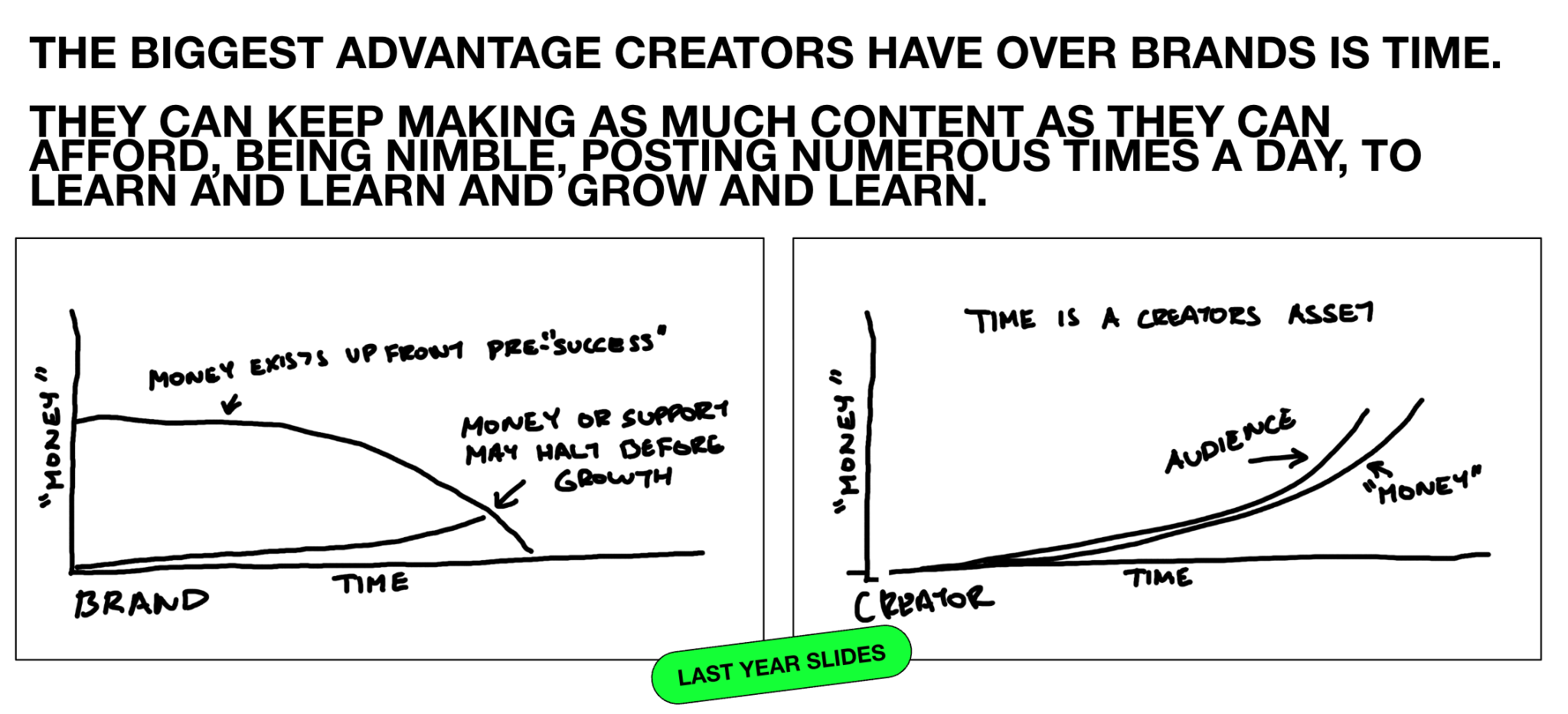
The immediate benefits of a podcast are obvious: access (getting interesting guests in a room) and goodwill (building relationships and driving insightful conversations). But the long-term benefit of becoming a trusted, consistent source that people seek out takes much longer to pay off.
What holds most firms back is a misreading of what early success looks like. The head of podcasts at DMG Media put it plainly at the event:
“Stop measuring your corporate podcasts against Joe Rogan.” – Jamie East, Head of Podcasts, DMG Media
In the UK, Harry Stebbings has been building 20VC for over a decade. Benchmarking your new show against what he’s built is completely unrealistic and will only deter and deflate a team’s efforts. The comparison that matters is if your show is better than it was six months ago and whether the right people are finding it.
Another way to put this is: the shows that keep going are the ones that succeed, not the other way around.
There's a compounding advantage available right now for founders, partners and operators who have the will and the discipline to seize it. The people you want to reach – LPs, founders, customers, talent – are already on YouTube and Spotify. Why not meet them there?
If you're thinking about starting a podcast, or want to make an existing one work harder for you, we'd love to talk.